The word "occult" comes from the Latin occultus, meaning "hidden" or "secret." Broadly speaking, the occult encompasses a wide range of beliefs and practices that explore the hidden or unseen aspects of reality — from divination and spirit communication to ritual magic and esoteric philosophy.
This section provides an introduction to some of the key areas within the occult, including the history and use of Ouija boards, the interpretations and symbolism of tarot cards, and the diverse traditions of witchcraft, from its ancient roots through the witch trials to its modern revival.
These articles aim to provide clear, informative overviews of these subjects, encouraging further research and exploration rather than presenting any single belief as fact. This is an ongoing project, and more articles covering other areas of occult study will be added over time.
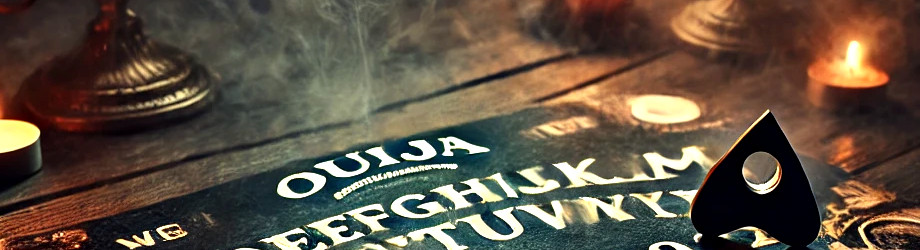
Ouija Boards
Discover the real history of the Ouija board, how the planchette actually moves, its role in pop culture and horror films, and whether it's considered safe to use.
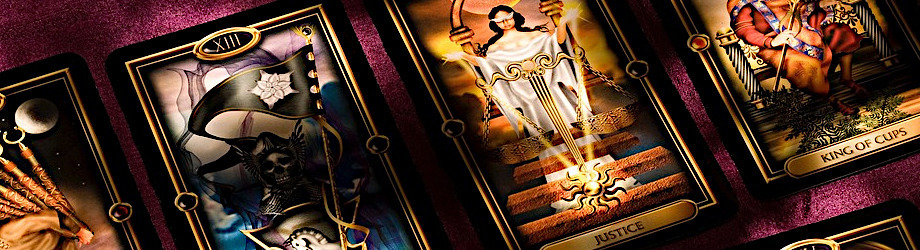
Tarot Cards
Uncover the history, structure, and meaning of the Major and Minor Arcana, how a tarot reading works, and how tarot is used for divination and self-reflection today.
Witchcraft
Explore the mysteries of witchcraft, from its historical roots and healing traditions through the devastating witch trials to its modern resurgence, including Wicca and other current paths.
The Occult Topics
The occult encompasses a broad range of topics, often overlapping and intertwined. Below is a list of some of the key areas within occult study:
Divination
Tarot Cards: Using a deck of 78 symbolic cards for divination and self-discovery.
Ouija Boards: A planchette and lettered board used for alleged spirit communication.
Astrology: The study of celestial bodies and their supposed influence on human affairs and personality.
Numerology: The belief in the mystical significance of numbers and numerical patterns.
Palmistry (Chiromancy): Reading the lines and features of the hand to interpret character or fate.
Runes: An ancient Germanic alphabet used for divination and symbolic guidance.
I Ching: An ancient Chinese divination text based on hexagram patterns.
Pendulum Dowsing: Using a suspended pendulum to answer questions or locate objects.
Crystal Ball Gazing (Scrying): Using a reflective or translucent surface to gain psychic visions.
Magic and Witchcraft
Wicca: A modern pagan religion that often incorporates witchcraft and nature-based ritual.
Traditional Witchcraft: Practices rooted in folk magic and pre-Christian European beliefs.
Ceremonial Magic: Complex rituals and invocations, often involving elaborate esoteric symbolism.
Chaos Magic: A modern magical system emphasizing personal belief and flexibility over fixed tradition.
Green Witchcraft/Herbalism: Magic and healing centered on plants, herbs, and the natural world.
Elemental Magic: Working with the classical elements of earth, air, fire, and water.
Spellcasting: The use of rituals, words, and tools to focus intention toward a desired outcome.
Esotericism and Mysticism
Hermeticism: A philosophical and religious tradition based on writings attributed to Hermes Trismegistus.
Gnosticism: A diverse set of ancient religious ideas emphasizing spiritual knowledge and salvation.
Theosophy: A system of esoteric philosophy concerned with the nature of the universe and humanity's place within it.
Kabbalah: A mystical tradition rooted in Jewish scripture and interpretation.
Alchemy: A philosophical and protoscientific tradition focused on the transmutation of matter and the soul.
Spiritualism: The belief in communication with the spirits of the dead, which gave rise to tools like the Ouija board.
Parapsychology and Psychic Phenomena
Extrasensory Perception (ESP): Perception of information beyond the five physical senses.
Telepathy: Mind-to-mind communication without the use of the known physical senses.
Clairvoyance: The claimed ability to see events or objects distant in time or space.
Precognition: The claimed ability to foresee future events before they happen.
Psychokinesis (Telekinesis): The claimed ability to move or influence objects with the mind alone.
It's important to note that the occult is not a monolithic entity. There is a wide range of perspectives, beliefs, and practices within these various areas, and no single interpretation defines the whole. Some people approach the occult with a skeptical or scientific mindset, treating it as folklore, psychology, or cultural history. Others embrace its mystical and spiritual aspects as a genuine practice or belief system. Both approaches are represented across the articles on this site.
Many of the images on my site are sourced from the great Pixabay website