Ouija boards, often shrouded in mystery and unease, have captivated the imagination of generations. These flat boards, printed with letters, numbers, and symbols, are used in a practice that claims to let participants communicate with spirits through a small pointer called a planchette. But what is the real history behind the Ouija board, how does it actually work, and why does it still spark fear and fascination in equal measure? This guide covers the origins, mechanics, cultural legacy, and ongoing safety debate surrounding one of the occult world's most recognizable objects.

The origins of the Ouija board trace back to the late 19th century, during the rise of the Spiritualism movement in the United States. Spiritualism, which gained enormous popularity in the 1840s and 1850s, promoted the belief that the living could communicate directly with the dead, and it gave rise to a booming industry of séances, mediums, and "talking boards" long before Ouija became a household name.
In 1890, businessman Charles Kennard, along with a group of investors including attorney Elijah Bond, patented and trademarked the "Ouija" board, with the name reportedly derived from a combination of the French and German words for "yes" — oui and ja. According to popular legend, the name itself was supplied by the board during a test session, which only added to its mystique from day one.
Initially marketed as an innocent parlor game for the whole family, the Ouija board quickly became associated with the occult and the supernatural. Its popularity surged dramatically in the years following World War I and during the 1918 influenza pandemic, as grieving families turned to it in hopes of reaching lost loved ones.
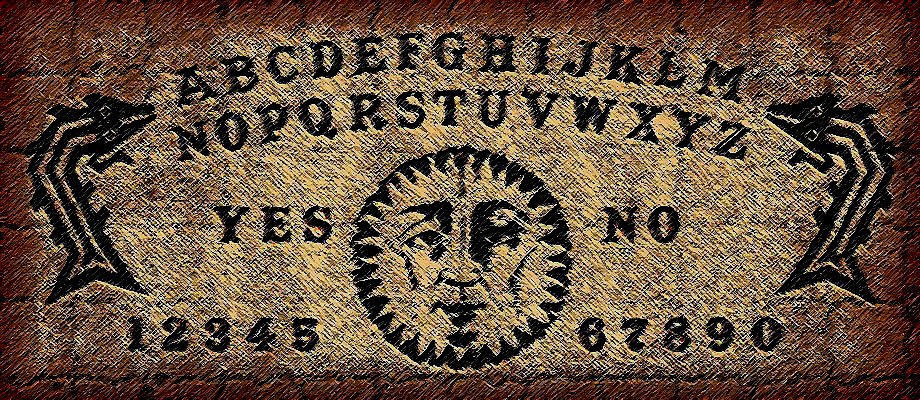
Using a Ouija board is generally a group activity. Participants sit around the board and place their fingertips lightly on the planchette, a small heart-shaped or teardrop-shaped pointer. The board itself is printed with the full alphabet, the numbers 0 through 9, the words "yes" and "no," and often "hello" and "goodbye" as well. As questions are asked aloud, the planchette is believed to glide across the board on its own, spelling out answers letter by letter.
Skeptics and scientists attribute this movement to the ideomotor effect, a well-documented psychological phenomenon in which people unconsciously make small muscle movements based on their expectations or suggestions, without any conscious awareness that they are doing so. This explains why the planchette often seems to move "on its own," even when no single participant believes they are pushing it, and why groups tend to produce far more coherent messages than any individual would alone.
Regardless of the scientific explanation, many people report eerie, emotional, or genuinely unexplained experiences with the board, and the sense of connecting with something beyond the participants in the room remains a core part of the Ouija board's enduring appeal.
Ouija boards have left an indelible mark on popular culture over the past century. They have appeared in countless films, novels, and television shows, almost always depicted as tools for dark magic or gateways to malevolent spirits. Movies like The Exorcist and the aptly named Ouija franchise have cemented the board's ominous reputation in the public imagination, reinforcing the widespread idea that dabbling with it can invite real danger.
At the same time, many people view Ouija boards simply as a game, entirely dismissing any supernatural implications. They regularly show up at sleepovers, parties, and Halloween gatherings, giving participants a light-hearted, spooky way to explore curiosity about the unknown together.
The safety of using Ouija boards remains a genuinely contentious topic, and opinions tend to fall into a few broad camps. Some believe that using the board can invite negative energies, unwanted attachments, or "lower" spirits, particularly if used carelessly or without any protective intention. Others argue it's simply a piece of cardboard and plastic with no supernatural properties at all, and that any unsettling experience comes from psychology and group suggestion rather than anything paranormal.
Many practitioners with experience in witchcraft and other spiritual traditions recommend caution regardless of belief, suggesting that anyone using a board approach the experience with respect and clear intention. Common advice includes only asking for positive interactions, avoiding use while under emotional distress, never using the board alone, and closing the session properly by saying "goodbye" and moving the planchette to that word before finishing.
Whether viewed as a mystical tool, a psychological curiosity, or a mere parlor game, Ouija boards continue to fascinate more than 130 years after they were first patented. Their combination of history, psychology, and cultural impact makes them a unique phenomenon that raises enduring questions about life, death, and the unknown. As long as people remain curious about the afterlife and the possibility of communicating with it, Ouija boards will likely endure as symbols of intrigue, fear, and fascination.
If you choose to explore the world of Ouija boards, approach the experience with an open mind and a cautious, respectful spirit. Whether you find answers, entertainment, or simply a good story to tell afterward, the journey into the unknown is often the most captivating part of all.
ARTICLE CATEGORY The Occult