Witchcraft is one of the oldest and most misunderstood terms in human history. The word conjures images of cauldrons, spells, and shadowy rituals, but the reality is far richer and more complicated. Across cultures and centuries, witchcraft has been reversed as sacred wisdom, condemned as heresy, and reclaimed as a modern spiritual path — sometimes all within the same society. This article traces the origins of witchcraft, the devastating witch trials that shaped its reputation, the practices and beliefs that define it today, and why millions of people around the world still call themselves witches.

The roots of witchcraft stretch back to ancient civilizations, long before the word "witch" carried any negative connotation. In early societies, the people we might now call witches were often healers, midwives, and keepers of herbal knowledge. They read the weather, tended the sick, and performed rituals tied to the harvest and the seasons. In many communities, this kind of practical magic was simply part of everyday survival, not something separate from religion or medicine.
Evidence of magical practice appears in ancient Egypt, Mesopotamia, Greece, and Rome, where spells, amulets, and charms were used for protection, love, health, and justice. The Greek goddess Hecate, associated with magic and crossroads, and the sorceress Circe from Homer's Odyssey reflect how deeply witchcraft was woven into early mythology. Far from being feared outright, magical practitioners in many of these cultures held respected — if sometimes ambiguous — social roles.
The perception of witchcraft changed dramatically during the Middle Ages, when the Christian Church began linking magical practice with heresy and devil worship. This shift set the stage for one of the darkest chapters in European and colonial history: the witch trials.
Between the 15th and 18th centuries, an estimated 40,000 to 60,000 people were executed across Europe and colonial America after being accused of witchcraft, with tens of thousands more imprisoned, tortured, or exiled. The publication of the Malleus Maleficarum ("Hammer of Witches") in 1487 gave witch hunters a chilling manual for identifying, interrogating, and punishing suspected witches, and it helped fuel mass hysteria across Germany, France, Switzerland, and Scotland.
The accused were overwhelmingly women, particularly those who were poor, elderly, widowed, unmarried, or otherwise living outside the protection of a husband or family. Midwives and folk healers were especially vulnerable, since their knowledge of herbs and childbirth was easily reframed as sinister. Accusations often arose from personal disputes, land conflicts, unexplained illness or death, or simple jealousy, and "evidence" could be as flimsy as a birthmark, a stumbled prayer, or a neighbor's testimony under torture.
In North America, the Salem witch trials of 1692 remain the most infamous example. Over the course of a few months in colonial Massachusetts, more than 200 people were accused of witchcraft and 20 were executed, most by hanging. The Salem trials are now widely understood as a case study in mass hysteria, religious extremism, and the dangers of scapegoating — lessons that historians still draw on when examining moral panics today.
The witch trials gradually declined through the 18th century as Enlightenment thinking took hold and legal standards of evidence improved, but their legacy endures. Many European countries and U.S. states have since issued formal pardons or apologies to those wrongly executed, and the history of the witch trials continues to shape how witchcraft is discussed, studied, and reclaimed today.
Witchcraft practices vary widely across cultures and individual traditions, but most share a common thread: the belief that intention, ritual, and a connection to natural or spiritual forces can bring about change. Common elements found across many witchcraft traditions include:
These practices are rarely uniform. A hereditary witch working within a specific family tradition may follow very different customs than a solitary practitioner who blends multiple influences, but both share the underlying belief that ritual and intention carry real power.
In recent decades, witchcraft has experienced a significant resurgence, sometimes called the "Witchcraft Revival." This modern movement encompasses a wide range of paths, most notably Wicca, a contemporary pagan religion founded in England in the mid-20th century by Gerald Gardner. Wicca emphasizes harmony with nature, reverence for a goddess and god (or a broader divine polarity), and the ethical practice of magic, often guided by principles like the Wiccan Rede: "An it harm none, do what ye will."
Beyond Wicca, modern witchcraft includes traditions such as green witchcraft, kitchen witchcraft, hedge witchcraft, and eclectic or "secular" witchcraft practiced without any specific religious framework. Many contemporary practitioners identify as solitary witches, drawing on multiple traditions, personal experience, and intuition rather than adhering strictly to one path.
Social media and the internet have played an enormous role in this revival. Platforms like TikTok, Instagram, and Pinterest have introduced "WitchTok" and similar communities to millions of new practitioners, making resources, tutorials, and shared knowledge more accessible than at any point in history.
Witchcraft today serves many roles depending on who practices it. For some, it is a genuine spiritual path that fosters a deep connection to nature and the wider universe. For others, it is a form of empowerment — a way to reclaim autonomy and identity in a world that has historically marginalized women, queer people, and other groups drawn to the practice.
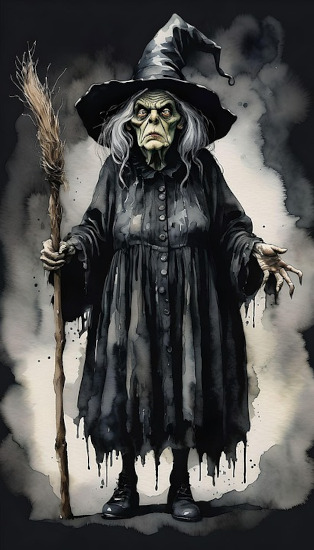
Witchcraft has also become a powerful cultural symbol far beyond its practitioners. It appears throughout literature, film, and television, from Shakespeare's Macbeth to modern series like American Horror Story and The Chilling Adventures of Sabrina. These portrayals continue to evolve, often reflecting the anxieties and attitudes of the era that produced them — from the fearsome hag of medieval folklore to the empowered, self-possessed witch of contemporary media.
The history of persecution also gives witchcraft a distinct place in conversations about gender, power, and social control. Scholars and practitioners alike often point to the witch trials as a lens for understanding how fear and misinformation can be used to target the vulnerable — a theme that resonates well beyond the historical witch hunts themselves.
Witchcraft is a multifaceted phenomenon with deep historical roots, a painful history of persecution, and undeniable contemporary relevance. As society continues to grapple with questions of power, gender, and spirituality, witchcraft offers a unique lens through which to explore these issues. Whether viewed as a practice, a belief system, a piece of history, or a cultural symbol, witchcraft remains an enduring and evolving part of human experience.
ARTICLE CATEGORY The Occult